
"Parents located in north London wants to find an exceptional and qualified instructor to assist their smallest child on his first steps to growing into an British gentleman."
When reading this advertisement, you might naturally overlook the phrase "initial stages" as mere figurative language.
Yet, it might be the crucial aspect of this distinctive job advert, as it seeks to recruit a tutor for a infant.
Many of responses have now been received since the unnamed family posted their call for the £180k-a-year tutor, who needs to be "a uniquely qualified person".
Over the last few weeks, the advert has gained notice in the news, with numerous asking why?
Progressive Approach
The CEO, head and founder of Tutors International, which is assisting the family in their hunt, explained that in spite of early scepticism, he considered the idea "far sighted", and "innovative".
When he met the family, he mentioned they understood the atypical aspect of their requirement, and how immature their son is.
But, they clarified that they "preferred not to postpone any longer" to get a tutor, as they had waited until their firstborn was five, and by that age "cultural bias had by then set in".
What precisely did the family indicate by "cultural bias"?
It's "comprehensive", Adam answered. "The way you eat, how you speak".
He stated the elder child had picked up "very nuanced, non-verbal cues" from the family, and had adopted their cultural norms. The family informed Adam they wished to avoid this pattern to happen again with their younger child.
The strategy: To hire a UK tutor, who needs to speak with Received Pronunciation, to shape the baby from day one.
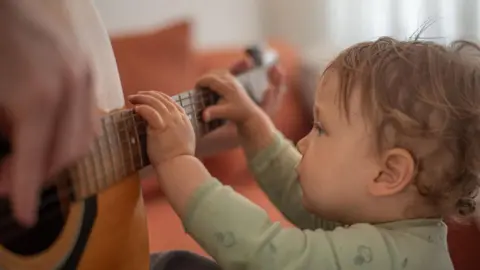
Osmotic Learning
"Much of the development at the beginning here is kind of absorbed naturally," explained the CEO.
It's through this subtle influence that the family are hoping the child will adopt the English characteristics they aim to impart.
He said the tutor must be somebody who went to "the right kinds of schools – the same kinds of schools as the family hope to send their son to".
"The tutor just has to be the appropriate candidate, they'll be carrying out things they don't even know they're doing, effortlessly," he said.
Money No Object
The family explained to the expert the selected educator should ideally also have familiarity of or enthusiasm in horse riding, alpine skiing, the arts and instrumental training so as to inspire the child in a wide range of passions.
More than that though, he said the family hoped the tutor to sign up the child on a variety of classes so the child would be "equestrian training and learning an instrument by the time they are around three years old".
In the family's minds, helping their son grow into a "British gentleman" will result in accomplishment and provide access.
"Taking into account the rights and wrongs of that, because it's definitely a class statement," he comments.
However, notwithstanding all this tutelage in "English culture", would the child absorb alleged cultural leaning from the globally influenced family he lives with anyway?
"Absolutely", answered the CEO. "The parents realize this might not succeed, but they've simply adopted the view of, 'let's give it a go and we'll proceed as quickly as we can', because the price of it is not relevant," he explained.
Impractical
Several in the private teaching field who express these concerns.
Another CEO, head and founder of a tutoring service, who also offer private tutors, wrote that "the process of becoming bicultural, or in fact, forming one's identity, is something that must be grown into, not designed."
Peter noted that he had moved from Asia to the UK at the time of 7 years old, and had been brought up experiencing and embodying dual heritages. He progressed to be educated at Cambridge University.
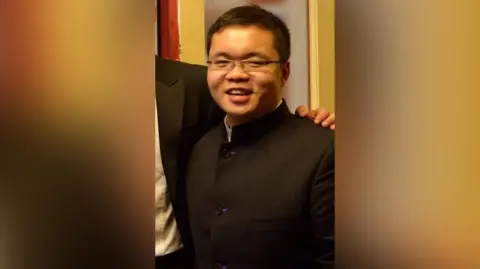
"The idea that an individual can function as a representation of Britishness, someone who can somehow impart the qualities of a English gentleman to a one-year-old child, strikes me as naive and impractical," he commented.
"In my experience, employing a quintessentially UK tutor from babyhood will does not necessarily create the outcome they desire.
"I did not have such a figure, and yet I have been lucky enough to enjoy several of the situations they desire for their son."
He stated: "The reality is, self-identity can not be imposed from the external environment; it must be selected, and it must come from within."
Purchasing UK Culture
Naturally, English culture is something the expert thinks can be instructed – and sold.
"I believe the situation that the international society holds us in this light is something that we should be cherishing|valuing|appreciating


